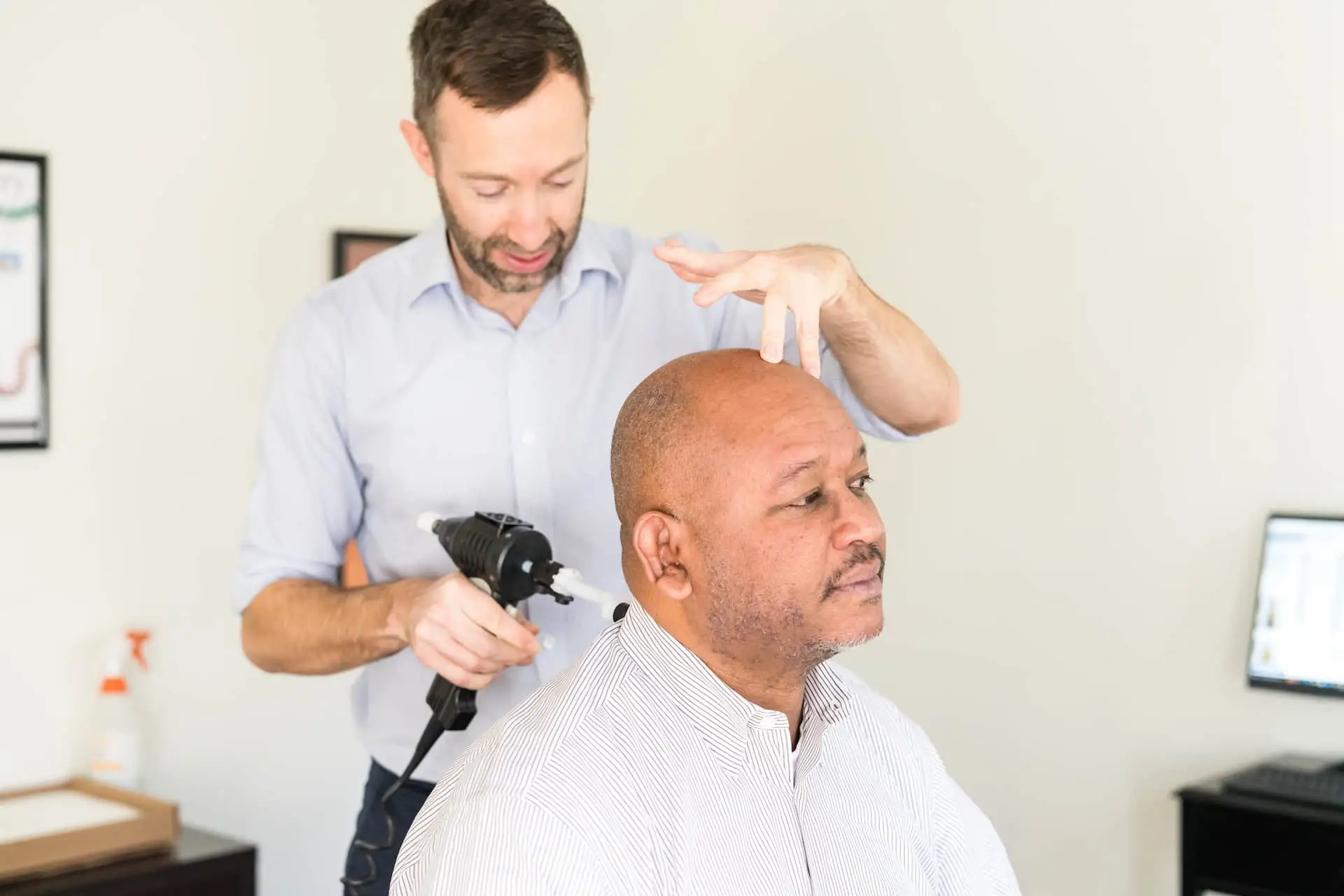
Post-concussion syndrome is when concussion symptoms like headaches, dizziness, and brain fog linger for weeks or even months after the original injury. What many people do not realize is that the same impact that caused the concussion often shifts the top vertebrae of the neck out of alignment. When that misalignment goes undetected, it can keep symptoms going long after the brain itself has begun to heal.
What Post-Concussion Syndrome Is
A concussion is a mild traumatic brain injury caused by a blow or jolt to the head. Most concussions improve within a couple of weeks. When symptoms stick around well beyond that window, it is called post-concussion syndrome.
The frustrating part for patients is that the injury often looks resolved on paper. Brain scans come back clear, the doctor says everything looks fine, and yet the headaches, fog, and dizziness continue.
That gap between what the scans show and how a person actually feels is where the neck deserves a closer look.
The Neck Connection Most People Miss
Think about the physics of a concussion. Whatever force was strong enough to rattle your brain inside your skull also traveled through your neck.
The atlas and axis, the top two vertebrae, sit right at the base of the skull and make up the most mobile part of the spine. A significant impact from a fall, a car accident, or a sports collision can easily knock them out of position.
Because these vertebrae sit next to the brainstem, a misalignment there can interfere with nerve signaling, blood flow, and the drainage of fluid around the brain. Those are exactly the systems tied to many lingering concussion symptoms.
That proximity is the whole reason a neck injury can masquerade as an ongoing brain problem. The symptoms feel like they are coming from the head, but their source may sit just below it, in vertebrae that standard testing never examined. Once you understand that, the persistence of the symptoms starts to make more sense, and so does the path to addressing it.
Concussions Don’t Only Come From Big Hits
People often assume a concussion requires a dramatic blow to the head. In reality, the head does not even have to be struck directly.
A whiplash-type motion from a car accident can produce a concussion and an upper cervical misalignment at the same time, since the brain and the neck both take the force of the sudden movement. Sports impacts, falls, and even a hard jolt can do the same.
This is part of why the neck and the brain injury are so often linked. The same event that shook the brain also moved the vertebrae just below it.
Why the Injury Often Gets Overlooked
Standard concussion care focuses on the brain, which makes sense given the nature of the injury. Rest, monitoring, and time are the usual recommendations.
What that approach can miss is the structural injury to the upper neck. The imaging used after a head injury is designed to rule out bleeding and fractures, not to measure the subtle positioning of the atlas and axis.
So a person can be told their scans are clear, which is true, while an upper cervical misalignment quietly keeps their symptoms alive. It is not that anyone did anything wrong. The neck component simply falls outside what those tests are built to catch.
Common Symptoms That May Trace Back to the Neck
Not every post-concussion symptom is neck-related, but a striking number of them overlap with what upper cervical misalignment can cause.
That list includes persistent headaches, dizziness and balance problems, brain fog, difficulty concentrating, neck pain and stiffness, sensitivity to light or noise, and trouble sleeping. When several of these persist together after a head injury, the neck is worth investigating.
This is a pattern we see regularly in Austin patients who came in after months of being told nothing more could be done.
The overlap is not a coincidence. Many of these symptoms are governed by structures that sit close to the atlas and axis, so a misalignment in that area can plausibly contribute to several of them at once.
How Upper Cervical Care Approaches Post-Concussion Symptoms
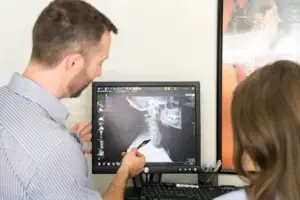
The Blair upper cervical technique, which we use at our Austin practice, is built for exactly this kind of precise structural problem. It starts with specialized imaging to map whether your atlas and axis have shifted, and by how much.
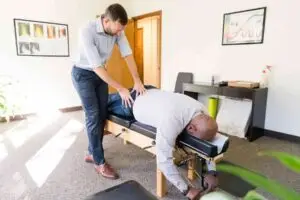
If a misalignment is found, we deliver a gentle, low-force correction tailored to your specific anatomy. There is no cracking and no twisting, which matters a great deal when someone is already dealing with headaches and sensitivity. You can read more on our Blair upper cervical chiropractic page.
The goal is to restore proper alignment so the nervous system can function without that structural interference. When the neck was part of the problem, addressing it can make a real difference in how someone feels.
What This Does Not Mean
Upper cervical care is not a cure for concussion, and we want to be clear about that. A brain injury is serious and deserves proper medical attention.
What we address is the structural component in the neck that standard concussion care often overlooks. For some people that component is a small piece of the picture, and for others it turns out to be a major one.
We also work alongside other providers rather than replacing them. Recovering from a head injury can take a team, and the neck is one part of that.
Why Timing Can Make a Difference
When an upper cervical misalignment lingers, the muscles and ligaments around it gradually adapt to the wrong position. The longer that pattern sets in, the more entrenched it can become.
That is why getting the neck evaluated sooner rather than later is worth considering, especially once it is clear that symptoms are not fading on the expected timeline. Catching a structural problem earlier tends to make the path forward simpler.
If you are already months out, that does not mean it is too late. It simply means the evaluation is even more worth doing.
How This Fits With the Rest of Your Recovery
Upper cervical care is not meant to replace the rest of your concussion recovery. Rest, a gradual return to activity, and guidance from your medical team all still matter.
What addressing the neck can do is remove one obstacle that may be holding your progress back. If a misalignment is interfering with nerve function and circulation near the brainstem, correcting it can support the recovery your body is already trying to make.
Think of it as addressing a piece that standard care tends to leave out, working alongside everything else rather than competing with it.
When to Seek Care
If you had a concussion and your symptoms have outlasted the expected recovery window, it is reasonable to have your upper neck evaluated. The same is true if new symptoms crept in during your recovery.
An examination is straightforward and answers a clear question: is a misalignment contributing to what you are feeling? You can read what to expect on our post-concussion syndrome page.
If lingering concussion symptoms have you searching for answers, schedule a visit with Full Life Chiropractic in Austin or call 512-953-9612 to have your neck checked.