After a car accident, a standard ER scan is designed to rule out broken bones and bleeding, not the subtle misalignment of the upper neck that a collision often causes. That is why you can be told everything looks fine and still develop neck pain, headaches, or stiffness in the days that follow. A thorough upper cervical evaluation checks for the structural injury those scans were never built to catch.
Why ER Scans Can Miss a Neck Injury
When you go to the emergency room after a crash, the staff have one main priority: ruling out anything life-threatening. X-rays and CT scans are excellent at spotting fractures, bleeding, and other serious damage.
What those scans are not designed to do is measure how the top vertebrae of your neck are positioned. A misalignment of the atlas and axis does not show up the way a broken bone does.
So you can leave the ER with a clean bill of health that is completely accurate for what they were checking, while a real structural injury in your neck goes unnoticed.
What Actually Happens to Your Neck in a Collision
In a crash, your body is held by a seatbelt, but your head is not. It whips forward and back in a fraction of a second, and your neck absorbs that violent motion.
This sudden movement can push the atlas and axis, the top two vertebrae, out of their normal alignment. These vertebrae are the most mobile part of the spine, which makes them especially vulnerable to that kind of force.
The result is often a misalignment that sits right at the base of the skull, close to the brainstem, where it can affect far more than just neck comfort.
Even Low-Speed Crashes Cause Real Damage
One of the biggest misconceptions is that a minor fender-bender cannot hurt you. People assume that if the car was barely damaged, their body must be fine too.
The reality is different. Even a low-speed collision generates enough force to move the upper cervical spine, and the damage to your neck does not scale neatly with the damage to your vehicle.
We regularly see Austin patients who walked away from a small crash feeling okay, only to develop symptoms once the initial adrenaline wore off.
Symptoms That Can Show Up Days or Weeks Later
Accident injuries do not always announce themselves right away. It is common for symptoms to surface hours, days, or even weeks after the event.
Watch for neck pain and stiffness, headaches, dizziness, shoulder or upper back tension, and trouble concentrating. Any of these appearing after a crash is worth taking seriously, even if you felt fine at the scene.
The delay is exactly why it pays not to brush off new aches in the week after a crash. What starts as mild stiffness can settle into a lasting problem if the underlying misalignment is never addressed. Paying attention early tends to make recovery more straightforward.
These delayed symptoms are one of the clearest signs that a structural injury may be present. You can read more on our neck pain page.
Why the Upper Neck Deserves Special Attention
The connection between a car accident and the upper neck is not a minor detail. Whiplash commonly produces misalignment at exactly the spot where the head meets the neck.
Standard neck pain after an accident is easy to write off as bruising or muscle soreness that will fade. Sometimes it does, but when the cause is a shifted vertebra at the top of the spine, it needs to be corrected rather than waited out. That distinction is the difference between a few rough weeks and a chronic issue.
Because the atlas and axis sit next to the brainstem, a misalignment there can contribute to headaches, dizziness, and even the lingering symptoms of post-concussion syndrome when a concussion was part of the accident.
This is why a careful look at the upper cervical spine matters so much after a collision. It is often where the real injury lives.
Why Adrenaline Can Hide Your Injuries at First
Right after a crash, your body floods with adrenaline and stress hormones. That surge is built to get you through an emergency, and one of its effects is masking pain.
So it is entirely normal to feel okay at the scene, exchange information, and drive home believing you escaped unhurt. The trouble is that the adrenaline fades over the next hours and days.
As it wears off, the pain and stiffness from an injury that was there all along start to surface. This is a big reason so many people underestimate what a collision did to their neck.
How We Evaluate Accident Injuries at Full Life Chiropractic
Our approach starts with a thorough history and examination focused on what the accident actually did to your spine. We are looking for the structural problems that a quick ER visit was not set up to find.
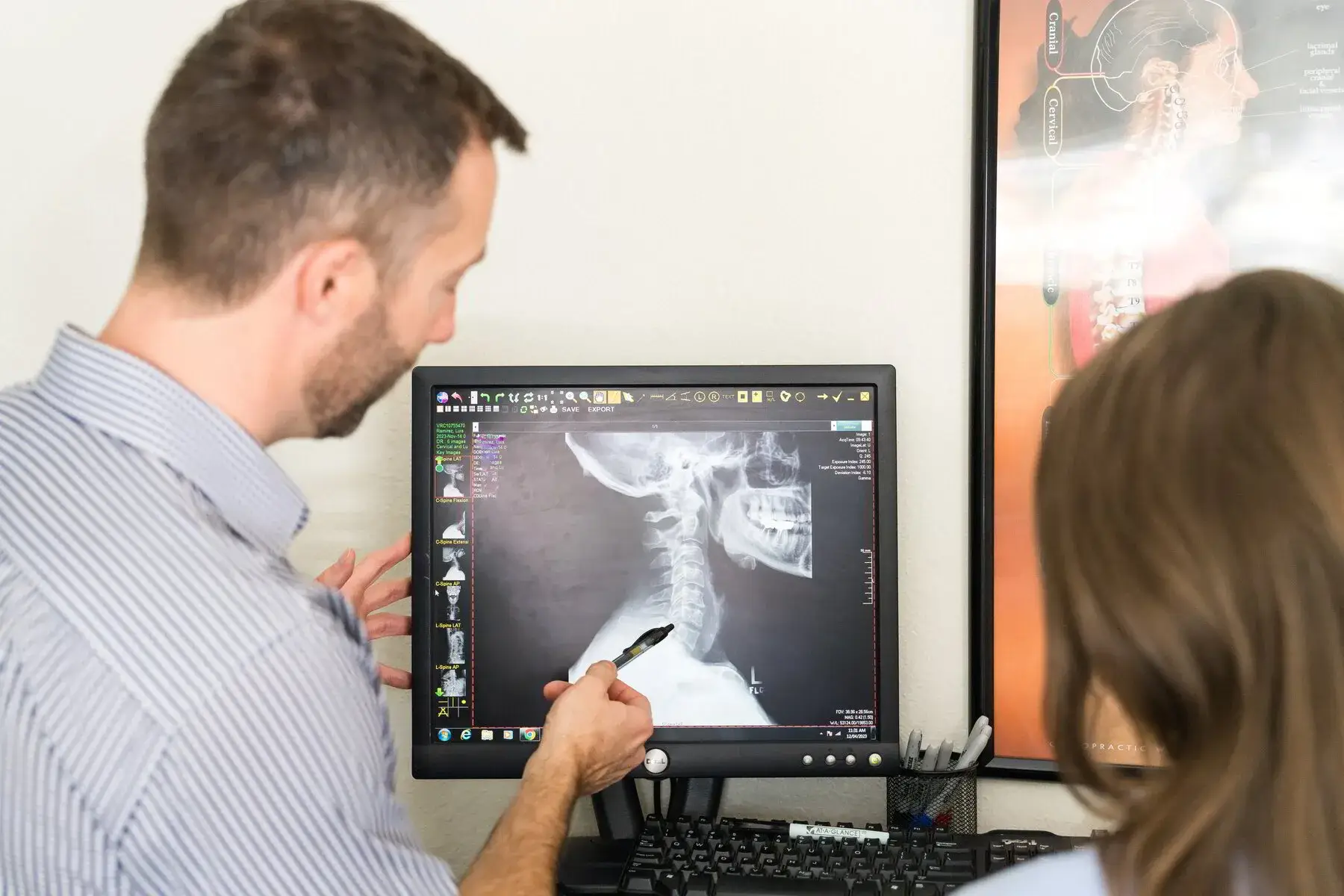
The Blair upper cervical technique uses specialized imaging to map whether your atlas and axis have shifted, and by how much. From there, any correction is gentle and specific to your anatomy, with no cracking or twisting.
You can learn more on our auto injury and personal injury care page. The goal is to identify and address the injury, not just to quiet the pain it causes.
Documentation for Insurance and Legal Claims
Beyond treatment, accident injuries come with paperwork. Insurance companies and attorneys need clear clinical documentation of what happened and what care is required.
We provide thorough documentation designed to support your claim. That means detailed records of your injuries, your treatment, and your progress over time.
Having proper documentation from the start can make a real difference to how your claim is handled. It is one less thing for you to worry about while you focus on recovering. We are used to working with both insurers and attorneys, so the records are prepared with those needs in mind.
What Accident Care Costs While Your Claim Is Active
Cost is a common concern, and it should not be the reason you skip care after a crash. Most Austin auto accident patients pay nothing out of pocket while their claim is active.
That means you can get the evaluation and treatment you need without paying up front, as long as your claim is open. We can walk you through exactly how this works for your situation.
The important thing is not to wait. An untreated upper cervical injury does not simply disappear on its own.
What to Do After a Car Accident
The most important step is simple: get your neck properly evaluated, even if you feel fine. A clear ER visit rules out emergencies, but it does not rule out an upper cervical injury.
Keep a record of how you feel in the days after the crash, including any new or worsening symptoms. That information is useful both for your recovery and for any claim.
Try not to wait for the pain to become severe before seeking care. Addressing a misalignment sooner is generally simpler than dealing with one that has been left for months.
If you have been in a car accident, even a minor one, schedule an evaluation with Full Life Chiropractic in Austin or call 512-953-9612 to have your neck properly checked.