
Vertigo and Ménière's Disease Relief in Austin with Blair Upper Cervical Chiropractic
Not all vertigo responds to the same approach, and for cervicogenic or upper cervical vertigo, Blair chiropractic care at Full Life Chiropractic in Austin addresses the structural cause that other providers often miss. Dr. Newell has seen strong results with vertigo cases that had not responded to standard medical management.

Understanding Vertigo and Ménière's Disease
Vertigo is not just dizziness. It is the sensation that the world is spinning, tilting, or moving when it is not. For some patients it comes in brief episodes triggered by head position changes. For others it is a persistent, disorienting presence that affects balance, concentration, and the ability to function normally day to day.
Ménière’s disease is a specific condition of the inner ear characterized by episodes of vertigo, fluctuating hearing loss, tinnitus, and a feeling of fullness or pressure in the ear. It is often managed medically with varying results, and many patients are not told that the upper cervical spine may be contributing to their symptoms.
Ménière’s disease is a specific condition of the inner ear characterized by episodes of vertigo, fluctuating hearing loss, tinnitus, and a feeling of fullness or pressure in the ear. It is often managed medically with varying results, and many patients are not told that the upper cervical spine may be contributing to their symptoms.
- Spinning or tilting sensation that comes on suddenly
- Dizziness that worsens with head movement or position changes
- Nausea accompanying vertigo episodes
- Ringing in the ears or muffled hearing
- Feeling of pressure or fullness in the ear
- Balance disruption and difficulty walking straight
The Upper Cervical Connection to Vertigo
The vestibular system, which controls balance and spatial orientation, has direct neurological connections to the upper cervical spine. The atlas and axis, the top two vertebrae, sit adjacent to the brainstem and directly influence the nerve pathways involved in balance, eye movement coordination, and inner ear function.
When C1 or C2 misaligns, it can disrupt these pathways and produce vertigo, dizziness, and balance disturbances that have nothing to do with the inner ear itself. This is why patients with cervicogenic vertigo often cycle through ENT specialists and neurologists without resolution. The structural cause is in the cervical spine, not the ear.
For Ménière’s disease specifically, research suggests that upper cervical misalignment can affect the drainage of cerebrospinal fluid and endolymph in ways that contribute to the pressure and fluid changes characteristic of the condition. Correcting C1 and C2 alignment addresses that structural component directly.
When C1 or C2 misaligns, it can disrupt these pathways and produce vertigo, dizziness, and balance disturbances that have nothing to do with the inner ear itself. This is why patients with cervicogenic vertigo often cycle through ENT specialists and neurologists without resolution. The structural cause is in the cervical spine, not the ear.
For Ménière’s disease specifically, research suggests that upper cervical misalignment can affect the drainage of cerebrospinal fluid and endolymph in ways that contribute to the pressure and fluid changes characteristic of the condition. Correcting C1 and C2 alignment addresses that structural component directly.
How Full Life Chiropractic Treats Vertigo in Austin
Blair Upper Cervical Chiropractic
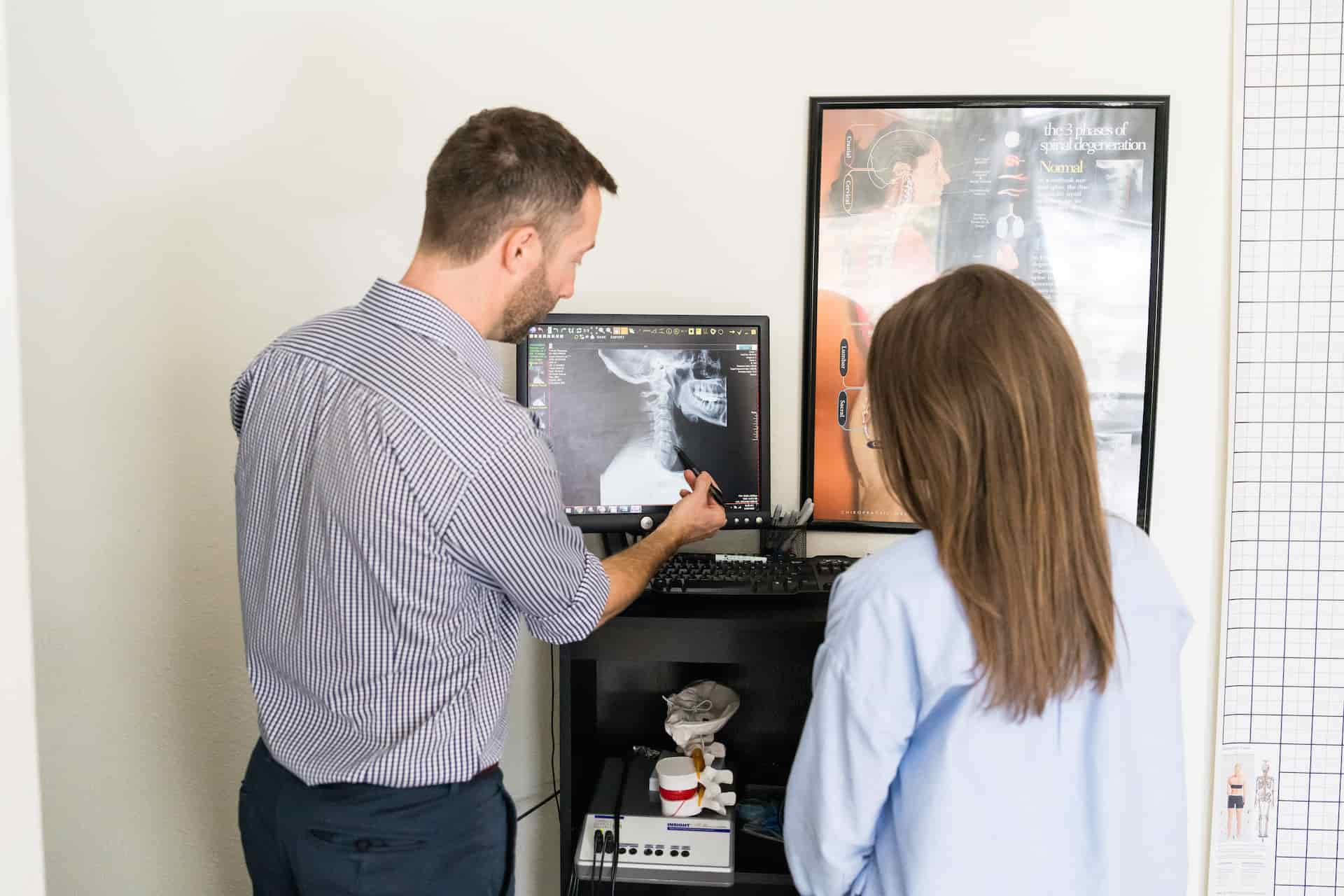
Blair analysis maps the exact misalignment of the atlas and axis using precise X-ray imaging, and the correction is delivered at the specific angle your anatomy requires. For vertigo patients, restoring normal alignment at C1 and C2 removes the structural interference with the vestibular and brainstem pathways contributing to their symptoms. Dr. Newell has worked with numerous vertigo and Ménière’s patients in Austin who had not found relief through standard medical approaches.
Full-Spine Chiropractic Techniques
Upper cervical misalignment rarely exists in isolation. Thompson Drop, CBP Mirror Image Adjusting, and SOT are used alongside Blair upper cervical care where the examination indicates broader spinal involvement contributing to the patient’s presentation.
What to Expect at Your First Vertigo Evaluation
Vertigo has multiple potential causes, and Dr. Newell’s evaluation is designed to determine whether an upper cervical structural component is present before any care is recommended.
- Detailed history of vertigo episodes including onset, triggers, frequency, and associated symptoms
- Neurological and vestibular screening
- Cervical range of motion and upper cervical palpation assessment
- X-ray analysis where indicated
- Screening for red flags requiring medical referral
One important note: vertigo associated with sudden severe headache, double vision, difficulty swallowing, slurred speech, or loss of coordination requires immediate medical evaluation. Dr. Newell screens for these at every new patient examination.
Cervicogenic vertigo often responds relatively quickly once the upper cervical correction is in place. Ménière’s disease cases vary more in their timeline and are approached as part of a longer-term management plan.
Cervicogenic vertigo often responds relatively quickly once the upper cervical correction is in place. Ménière’s disease cases vary more in their timeline and are approached as part of a longer-term management plan.
Frequently Asked Questions About Vertigo and Ménière's Disease
Can chiropractic really help with vertigo?
For vertigo with a cervicogenic or upper cervical component, yes. Blair upper cervical chiropractic directly addresses the structural relationship between C1, C2, and the vestibular and brainstem pathways involved in balance. Many patients who have not responded to repositioning maneuvers or medical management find significant improvement once the cervical component is corrected.
How do I know if my vertigo is coming from my neck?
Common indicators include vertigo that worsens with head or neck movement, a history of neck injury or whiplash, vertigo accompanied by neck pain or stiffness, or vertigo that has not responded to repositioning maneuvers like the Epley. Dr. Newell’s examination identifies whether an upper cervical structural component is present.
Is Blair chiropractic safe for vertigo patients?
Yes. The Blair adjustment is low-force with no cracking or twisting of the neck. It is one of the gentlest cervical correction approaches available and is well suited to patients dealing with vestibular sensitivity.
Can chiropractic help with Ménière's disease?
For Ménière’s patients with an upper cervical component, chiropractic care can reduce the frequency and intensity of episodes by addressing the structural factors that contribute to inner ear pressure and fluid regulation. It works alongside medical management and is not presented as a cure.
What if my vertigo has already been diagnosed by an ENT or neurologist?
That diagnosis is valuable and Dr. Newell will take it into account. Chiropractic care for the cervical component is complementary to medical management, not a replacement for it.
Ready to Find Relief from Vertigo in Austin?
Full Life Chiropractic is located at 3355 Bee Caves Rd #603, Austin, TX 78746. Dr. Newell sees new patients outside of standard adjusting hours.