
Sciatica Relief in Austin at Full Life Chiropractic
Sciatica can come from a disc, a lumbar joint, the sacroiliac joint, or the piriformis muscle, and the right treatment depends entirely on which one it is. Full Life Chiropractic in Austin identifies the source before starting care so the approach actually matches the problem.
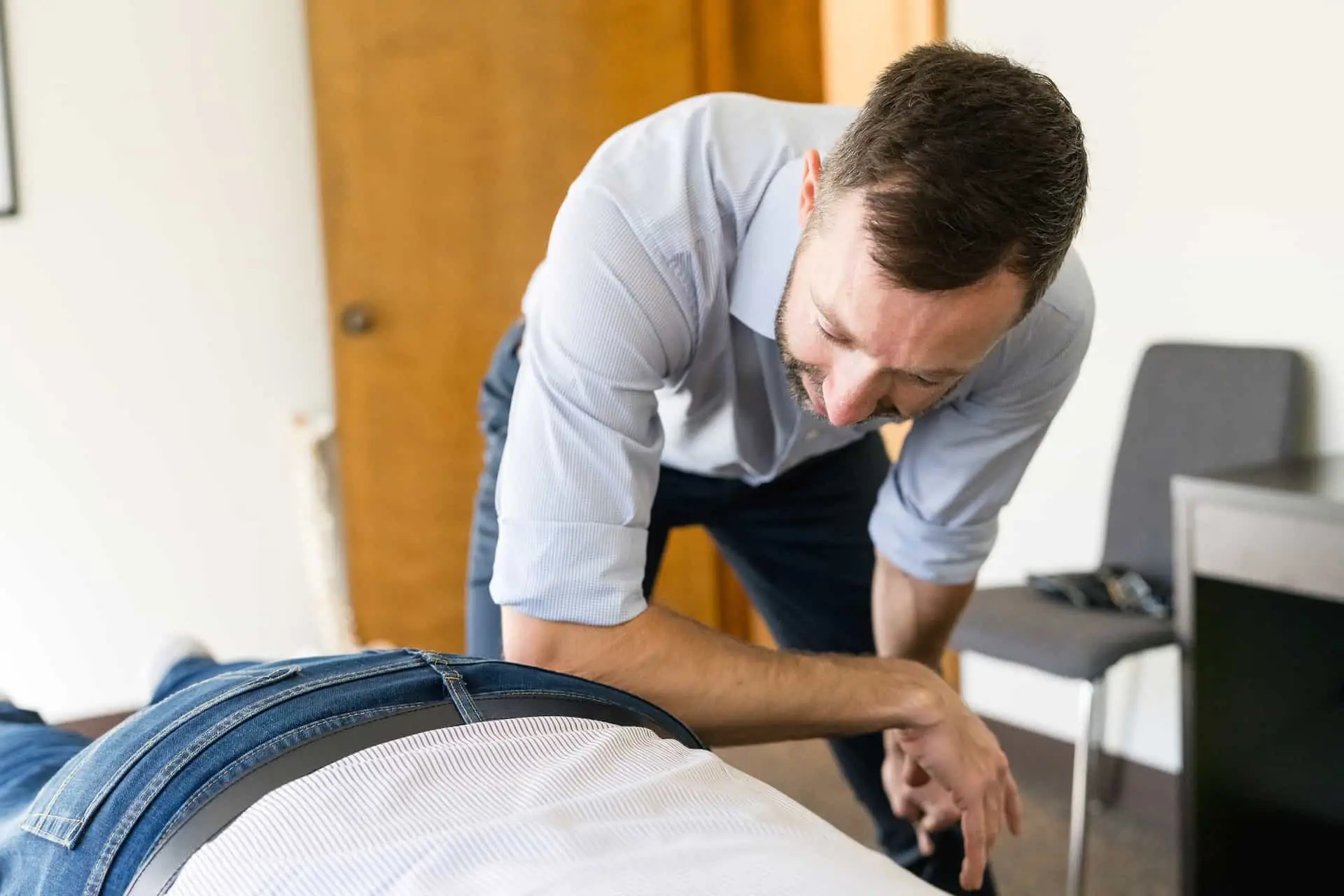
What Sciatica Actually Feels Like
Sciatica is not a diagnosis of the spine itself. It is a description of what happens when the sciatic nerve is being compressed or irritated somewhere along its path from the lumbar spine through the pelvis and into the leg. The burning, electric-shock sensation that runs from the low back through the buttock and down the back of the leg. The way sitting in a car or at a desk makes it flare. The numbness in the foot that comes and goes.
Sciatica is a symptom, not a diagnosis in itself. It tells you a nerve is involved, but not what is causing the compression. That distinction matters entirely for treatment.
Sciatica is a symptom, not a diagnosis in itself. It tells you a nerve is involved, but not what is causing the compression. That distinction matters entirely for treatment.
- Sharp, burning, or electric-shock pain traveling from the lower back or buttock down one leg
- Numbness or tingling in the leg, calf, or foot
- Muscle weakness in the affected leg
- Pain that worsens with sitting, standing for long periods, coughing, or sneezing
- Symptoms typically on one side of the body at a time
What Is Actually Causing Your Sciatica
Identifying the specific cause matters because different causes require different approaches.
Lumbar Disc Herniation
A bulging or herniated disc at L4-L5 or L5-S1 can press directly on the nerve roots that form the sciatic nerve. This type tends to worsen with sitting and forward bending and may come with back pain alongside the leg symptoms.
Lumbar Joint Restriction
When the lumbar vertebrae lose normal motion or position, they can narrow the space where nerve roots exit the spine, creating the same irritation and leg pain pattern. This type often responds quickly to chiropractic adjustments once the specific levels involved are identified.
Sacroiliac Joint Dysfunction
The SI joint connects the sacrum to the pelvis and is a frequently overlooked source of sciatica-type symptoms. When it is restricted or inflamed, it can refer pain into the buttock and down the leg in a pattern that mimics disc-related sciatica but requires different treatment.
Piriformis Syndrome
The piriformis muscle sits deep in the glute and the sciatic nerve runs through or near it. When this muscle is chronically tight or in spasm, it can compress the nerve in the pelvis rather than at the spine. It responds differently than disc-related sciatica and is missed frequently by practitioners who default to lumbar imaging without examining the hip.
How Full Life Chiropractic Treats Sciatica in Austin
Dr. Newell identifies the specific source of sciatic compression before any care begins. That evaluation determines the approach.
Chiropractic Adjustments
Lumbar and pelvic adjustments address the joint restriction and misalignment contributing to nerve compression at the source. For disc-related sciatica, adjustments restore proper spacing and mechanics at the affected lumbar levels. For SI joint involvement, pelvic corrections restore normal sacroiliac motion. Thompson Drop, SOT, and CBP Mirror Image Adjusting are used depending on what the examination reveals.
Spinal Decompression
For sciatica driven by disc herniation at L4-L5 or L5-S1, the Chattanooga Triton creates a negative pressure environment that reduces the force on the compressed nerve root and encourages bulging disc material to retract. Decompression is most appropriate for disc-related sciatica and is used alongside chiropractic adjustments as part of a complete care plan.
Blair Upper Cervical Chiropractic
Pelvic and lumbar mechanics are directly influenced by upper cervical alignment. For sciatica patients who have not responded fully to lumbar care alone, addressing C1 and C2 misalignment can remove a compensatory pattern that has been maintaining the problem.
What to Expect at Your First Sciatica Evaluation
Sciatica has multiple possible sources, and identifying the right one is the foundation of effective care.
- Detailed history of leg symptoms, onset, and what makes them better or worse
- Orthopedic and neurological testing including straight leg raise, piriformis test, FABER test, and dermatome and reflex testing
- Assessment of whether symptoms are disc-related, joint-related, or muscular
- Blair X-ray analysis where indicated
- Care plan presented at day three
One important note: severe or rapidly progressive leg weakness, difficulty walking, loss of bladder or bowel control, or saddle anesthesia require urgent medical attention rather than chiropractic care. Dr. Newell screens for these red flags at the initial evaluation and refers appropriately when needed.
Most patients with mechanical sciatica begin to notice meaningful improvement in leg symptoms within the first several visits. Cases involving longer-standing nerve compression may take more time.
Most patients with mechanical sciatica begin to notice meaningful improvement in leg symptoms within the first several visits. Cases involving longer-standing nerve compression may take more time.
Why Sciatica Comes Back and How to Prevent It
Sciatica has a well-known tendency to recur when the underlying mechanical cause was never fully addressed.
- Avoid prolonged sitting in flexed positions, use lumbar support, take movement breaks
- Strengthen core muscles to reduce disc and joint stress
- Stretch hip flexors and piriformis regularly, tight hip muscles are common contributors to recurrence
- Use proper lifting mechanics, keeping the spine neutral and using the legs
- Sleep on your side with a pillow between the knees to keep the pelvis neutral
- Periodic maintenance care to catch and correct minor dysfunction before it builds
Frequently Asked Questions About Sciatica
How do I know if my leg pain is actually sciatica?
True sciatica follows a specific nerve pathway from the lower back through the buttock and into the leg. It is typically one-sided, may include burning, shooting, or electric-shock sensations, and is often accompanied by numbness or tingling in the leg or foot. Dr. Newell’s examination confirms whether the sciatic nerve is involved and which structure is compressing it.
Can sciatica heal on its own without treatment?
Some acute cases do improve with rest. However, the structural cause, whether a disc, a restricted joint, or a tight piriformis, typically does not resolve on its own. Without addressing the underlying cause, recurrence is common.
What is the difference between disc sciatica and piriformis syndrome?
Disc sciatica originates at the lumbar spine where herniated disc material presses on a nerve root. Piriformis syndrome involves compression of the sciatic nerve by the piriformis muscle deep in the glute, with no disc involvement. They can produce similar leg pain patterns but require entirely different treatment approaches. The distinction is made through orthopedic testing, not imaging alone.
Is it safe to get adjusted when I have sciatica?
Yes. Dr. Newell uses low-force techniques appropriate for the level of nerve irritation present. For disc-related sciatica, decompression is often incorporated alongside gentle adjustments rather than high-velocity lumbar manipulation.
Should I rest or stay active with sciatica?
Moderate activity is generally better than complete rest. Prolonged sitting and forward bending tend to worsen disc-related sciatica and should be minimized. Dr. Newell provides specific guidance based on what is driving your symptoms.
When should I see a surgeon about my sciatica?
Progressive weakness in the leg, foot drop, or loss of bladder or bowel control require urgent medical evaluation. These are signs of severe nerve compression that may require surgical intervention. For all other presentations, chiropractic with decompression is a highly appropriate first step.
Ready to Get Lasting Relief from Sciatica in Austin?
Full Life Chiropractic is located at 3355 Bee Caves Rd #603, Austin, TX 78746. Dr. Newell sees new patients outside of standard adjusting hours.