
Tension headaches, migraines, and cervicogenic headaches can feel similar but come from different places. A tension headache feels like a tight band around your head, a migraine is usually an intense, throbbing pain often with nausea or light sensitivity, and a cervicogenic headache actually starts in your neck and refers pain to your head. Telling them apart matters, because the one that comes from your neck responds to a very different kind of care.
Tension Headaches
Tension headaches are the most common type. They tend to feel like a dull, steady pressure or a tight band wrapping around the head.
The pain is usually mild to moderate and affects both sides. It often comes with tightness in the neck, shoulders, and scalp, and it can be triggered by stress, poor posture, or fatigue.
Most people experience these at some point. They can be occasional or, for some, a frequent and frustrating pattern.
They rarely come with the nausea or visual changes that mark a migraine, which is one way to tell the two apart. The discomfort is real but usually more of a persistent pressure than a debilitating attack. For many people they ease with rest, hydration, or relieving the tension in the neck and shoulders.
Migraines
Migraines are a different animal. The pain is typically intense and throbbing, and it often affects one side of the head.
Along with the pain, migraines frequently bring nausea, sensitivity to light and sound, and sometimes visual disturbances known as aura. An episode can last hours or even days and can be genuinely disabling.
Migraines are a complex neurological condition with many possible triggers. They deserve proper medical attention, and care often involves more than one approach.
Because migraines are so complex, they usually respond best to a combination of strategies rather than a single fix. Identifying triggers, medical care, and lifestyle adjustments all tend to play a part.
Cervicogenic Headaches
Cervicogenic headaches are the type most people have never heard of, and they are the ones with a direct structural cause. The word simply means the headache originates in the neck.
The pain usually starts at the base of the skull and radiates forward, often on one side. It can be triggered or worsened by neck movement, certain postures, or pressure on the neck.
Because the pain is felt in the head, these headaches are frequently mistaken for migraines or tension headaches. The real source, though, is the upper part of your neck.
Another clue is that the pain often stays on the same side from one episode to the next, tracking the neck problem behind it. Some people also notice reduced neck movement or tenderness at the base of the skull. These physical signs point back to the source in a way migraines and tension headaches usually do not.
How to Tell Them Apart
Here is a simplified way to compare the three:
- Tension headache: Dull, band-like pressure on both sides, often with muscle tightness.
- Migraine: Intense, throbbing pain, often one-sided, with nausea or light and sound sensitivity.
- Cervicogenic headache: Pain starting at the base of the skull, often one-sided, linked to neck movement or posture.
These categories can overlap, and a proper evaluation is the only way to be sure. Still, the pattern of your pain offers strong clues.
What Triggers Each Type
Knowing the common triggers can help you spot which headache you are dealing with. Tension headaches are often set off by stress, poor posture, eye strain, and lack of sleep.
Migraine triggers vary widely and can include certain foods, hormonal changes, bright lights, weather shifts, and stress. Many people with migraines keep a log to identify their personal triggers.
Cervicogenic headaches, by contrast, are typically provoked by neck movement, sustained postures, or pressure on the neck. That link to the neck is one of their most telling features.
Why the Distinction Matters
Getting the type right changes everything about how you address it. Treating a cervicogenic headache as if it were a migraine can mean years of medication that never touches the actual cause.
When the source is structural, the answer is structural too. A headache coming from a neck misalignment will not resolve until the neck is addressed.
This is why so many people with the neck-based type stay stuck. The care they have tried was aimed at the wrong target.
Why Headaches Are So Often Misdiagnosed
Part of the problem is that all three types produce pain in the head, so the location alone rarely tells the whole story. Two very different causes can feel deceptively similar.
Standard evaluations also tend to focus on the head itself rather than the neck, so a cervicogenic cause is easy to overlook. If no one examines the upper neck, its role stays hidden.
The result is that many people are treated for the wrong type for years. Getting an accurate read on where your headache actually comes from changes the entire plan.
The Neck Connection Behind Cervicogenic Headaches
The upper cervical spine sits right at the base of the skull, and the nerves in that region are closely tied to head pain. When the atlas and axis are misaligned, they can irritate those nerves and refer pain into the head.
This is the mechanism behind a cervicogenic headache. The problem is in the neck, but the pain shows up in the head, which is exactly what makes it so easy to misidentify.
You can read more on our headaches and migraines page.
How Upper Cervical Care Can Help
For headaches with a neck-based cause, correcting the upper cervical misalignment addresses the source directly. The Blair upper cervical technique, used at our Austin practice, is built for this kind of precise structural problem.
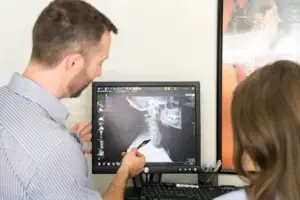
It uses individual imaging to map how your top vertebrae have shifted, then applies a gentle, specific correction with no cracking or twisting. You can read more on our Blair upper cervical chiropractic page.
When a headache truly stems from the neck, addressing that root cause can change the pattern in a way that symptom relief alone cannot.
Can You Have More Than One Type?
Yes, and this is part of why headaches can be so confusing. It is entirely possible to experience tension headaches and migraines, or to have a cervicogenic component layered on top of another type.
A neck-based problem can even act as a trigger that sets off a migraine in someone already prone to them. In those cases, addressing the neck may reduce how often the episodes strike.
This overlap is exactly why a careful evaluation is worth more than self-diagnosis. Sorting out what is actually driving your headaches is the first step to addressing them.
When to Get Evaluated
If your headaches keep returning despite treatment, or if they seem tied to your neck or posture, it is worth having your upper cervical spine checked. That is especially true for Austin patients who have cycled through options without lasting results.
An evaluation can clarify whether a structural neck problem is contributing to your headaches. Any severe, sudden, or unusual headache should be evaluated by a medical provider promptly.
If headaches keep interrupting your life, schedule a visit with Full Life Chiropractic in Austin or call 512-953-9612 to find out what is really behind them.