Trigeminal neuralgia – the electric-shock facial pain condition often described as one of the most severe in medicine – can have a structural component originating at the upper cervical spine. When C1 and C2 are misaligned, they can create pressure or irritation along the pathway of the trigeminal nerve at the level of the brainstem. For patients in Austin who’ve exhausted medication options and are looking for a conservative structural approach, Blair upper cervical chiropractic is worth a serious look.
Why Trigeminal Neuralgia Is So Difficult to Treat
The trigeminal nerve is the largest cranial nerve in the body. It supplies sensation to the entire face – the forehead, cheek, jaw, and teeth – and when it fires abnormally, the result is sudden, violent, one-sided facial pain that patients consistently describe as the worst pain they’ve ever experienced. Episodes are often triggered by the lightest contact: a breeze, eating, talking, brushing teeth.
Standard medical management involves anticonvulsant medications that reduce nerve excitability. For many patients these work reasonably well initially, but effectiveness often decreases over time and side effects can be significant. Surgical options – microvascular decompression, gamma knife radiosurgery, glycerol injections – exist for severe cases but carry their own risks and variable outcomes.
What’s consistently underexplored is the structural question: is there a mechanical reason why the trigeminal nerve is behaving abnormally? And specifically, is there a cervical structural component that, if corrected, would reduce the irritation driving the episodes?
The Anatomy That Connects Trigeminal Neuralgia to the Upper Cervical Spine
The trigeminal nerve originates in the pons – a region of the brainstem – and its sensory nucleus, the trigeminal nucleus caudalis, extends from the brainstem down through the upper cervical spinal cord to approximately the level of C2 and C3. This is the key anatomical detail that makes upper cervical alignment directly relevant to trigeminal nerve function.
When the atlas (C1) or axis (C2) are misaligned, the resulting mechanical stress on the surrounding neural tissue can affect trigeminal nucleus function through several mechanisms: direct mechanical pressure on the nerve pathways in the upper cervical region, tension on the meningeal coverings of the brainstem, and altered blood flow and cerebrospinal fluid dynamics in the posterior fossa.
This is why patients whose trigeminal neuralgia began or significantly worsened after a head or neck injury are particularly worth evaluating from an upper cervical perspective. The structural displacement that occurred at C1 or C2 during the injury may be creating ongoing mechanical irritation of the trigeminal pathway that medications are suppressing but not resolving.
Who Is Most Likely to Have a Cervical Component
Not every trigeminal neuralgia case has a significant upper cervical structural component. In cases where the condition is caused by direct vascular compression of the trigeminal nerve root at the brainstem – the classic presentation – microvascular decompression surgery has a strong track record and upper cervical chiropractic is not the primary answer.
However, a meaningful subset of trigeminal neuralgia patients have a cervical structural component that is driving or worsening their symptoms. Indicators that suggest this is worth investigating include:
- Onset or significant worsening following a head or neck injury, whiplash, or concussion
- Associated neck pain or stiffness, particularly on the same side as the facial pain
- Symptoms that shift with head position or are worse after sustained postures
- Associated occipital headaches or base-of-skull pain
- Incomplete or temporary response to medications with no clear improvement in baseline
If several of these apply to your situation, an upper cervical structural evaluation is a clinically reasonable next step – and one that most patients in this category have never had.
What a Blair Evaluation for Trigeminal Neuralgia Looks Like
Dr. Newell approaches trigeminal neuralgia with clinical honesty. The first step is a detailed history focused on onset timing, injury history, symptom characteristics, and what has and hasn’t helped. A neurological screening, cranial nerve assessment, and upper cervical palpation follow.
If the examination suggests a cervical structural component is likely, specialized Blair X-rays are taken to map the exact misalignment of C1 and C2. These aren’t standard X-rays – they’re taken at specific angles designed to reveal the precise displacement of each vertebra relative to your individual joint anatomy. The analysis determines whether a correction is indicated and, if so, exactly what angle that correction needs to be delivered at.
If Dr. Newell’s examination does not suggest a significant cervical component, he’ll tell you that directly. He’s not in the business of treating conditions that aren’t likely to respond to what he does.
The Blair Correction: What It Involves and What to Expect
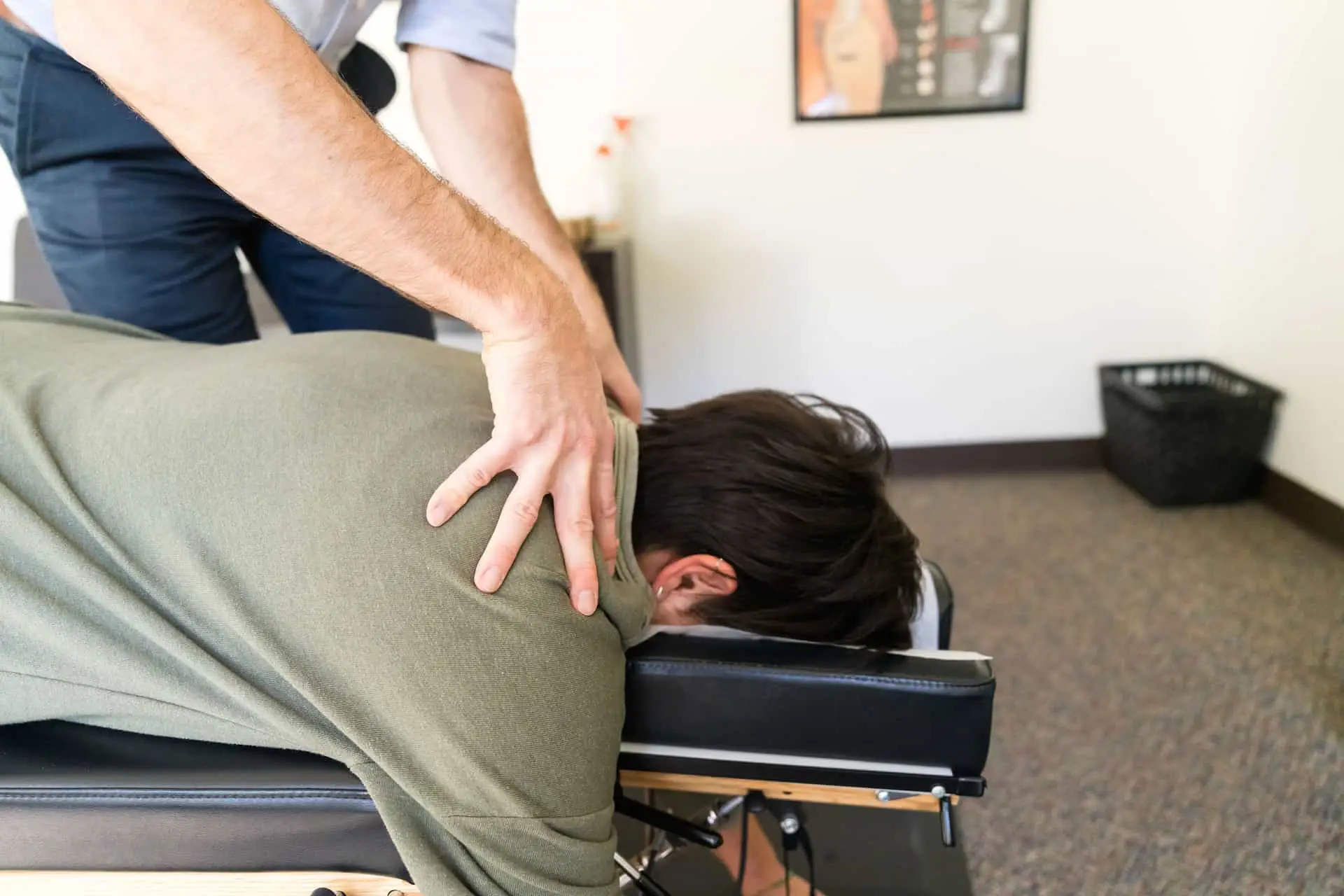
For patients where a cervical structural component is identified, the Blair upper cervical adjustment is low-force, precisely targeted, and involves no cracking or twisting of the neck. This is particularly important for trigeminal neuralgia patients, whose nerve pathways are already sensitized. The last thing an irritated trigeminal system needs is aggressive cervical manipulation.
The adjustment is delivered with the patient lying on their side on a specialized table. The force applied is gentle and directed at the specific angle the X-ray analysis requires. Afterward, patients rest briefly to allow the nervous system to settle before leaving.
Progress is monitored using objective measurements at each subsequent visit. If the correction is holding, no adjustment is made. The goal is structural stability – a correction that holds and allows the neural environment around the trigeminal pathway to calm down over time.
Realistic Expectations for Trigeminal Neuralgia Patients
For patients with a genuine upper cervical structural component, improvement in episode frequency and intensity is what most commonly results from Blair correction. Some patients experience meaningful change relatively quickly. For others, particularly those with long-standing conditions or significant involvement of the surrounding muscles and joints, improvement is more gradual.
Upper cervical chiropractic does not replace medical management for trigeminal neuralgia. Dr. Newell never recommends discontinuing prescribed medications. What he can provide is a structural correction that addresses a component of the problem that medications don’t touch – and for patients with a cervical component, that combination can produce results that neither approach achieves alone.
Other Conditions That Often Accompany Trigeminal Neuralgia
Upper cervical subluxation rarely limits its effects to one nerve or one symptom. Patients presenting with trigeminal neuralgia at Full Life Chiropractic in Austin frequently also have occipital neuralgia, TMJ pain, or chronic headaches running alongside their facial pain. This overlap isn’t coincidental – all of these involve nerve pathways that share proximity to the upper cervical spine. Addressing the structural cause at C1 and C2 often has positive effects across multiple symptoms simultaneously.
Taking the Next Step
Trigeminal neuralgia is a serious condition that deserves a serious, specific evaluation. If you’ve been managing symptoms with medications, if you’re considering surgical options, or if your condition began after a head or neck injury and no one has evaluated the cervical structural piece, a Blair evaluation at Full Life Chiropractic is worth having.
Contact us or schedule online to book your initial consultation in Austin. You can also call at 512-953-9612. The evaluation will give you an honest answer about whether an upper cervical structural component is likely present – and what doing something about it would involve.