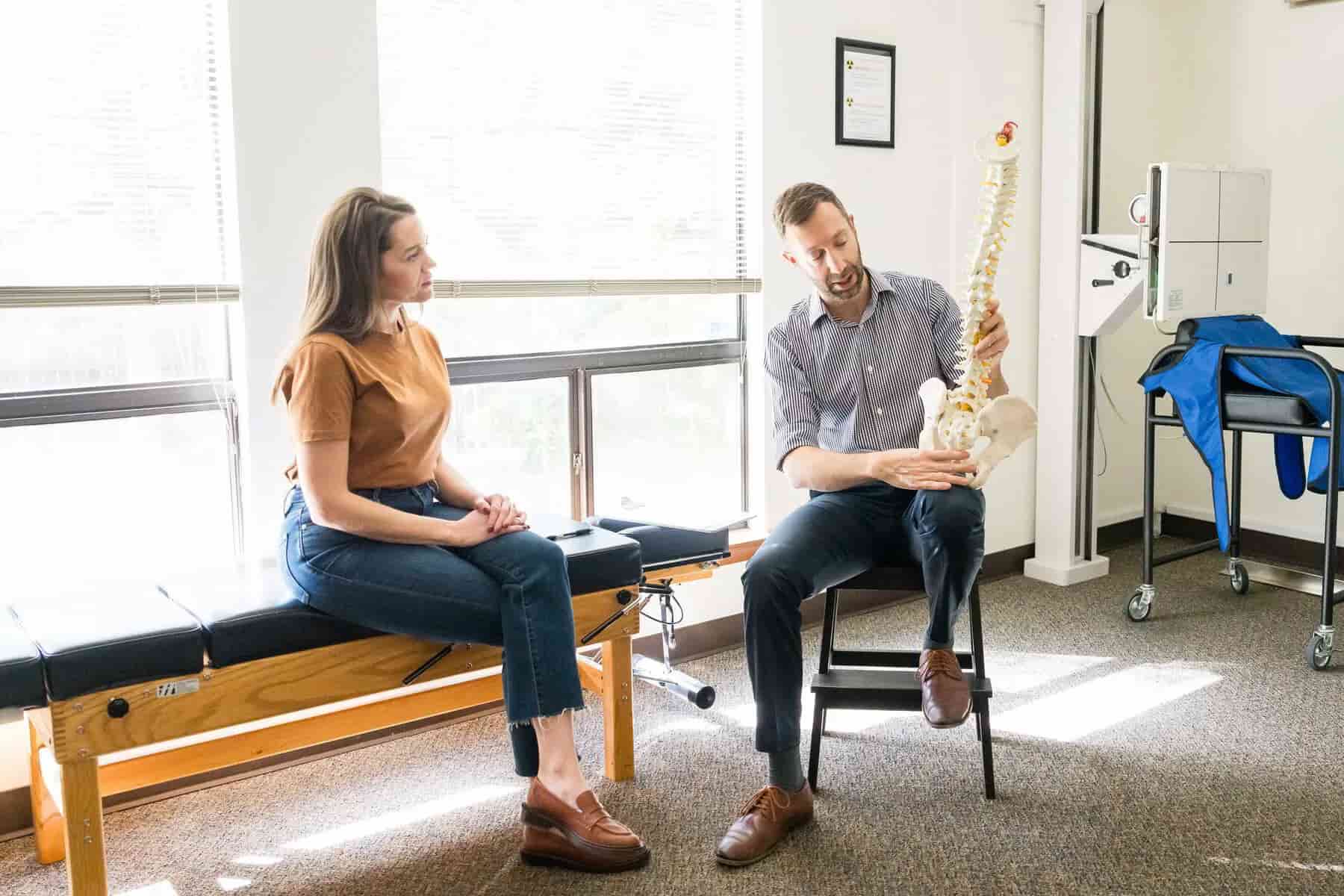
Spinal decompression and back surgery both aim to take pressure off compressed discs and nerves, but they go about it in completely different ways. Decompression is a non-surgical treatment that gently stretches the spine to relieve that pressure, with no incisions and no recovery downtime. Surgery physically alters the structure of the spine and is usually reserved for severe cases or situations where conservative care has not helped. For many people with disc pain or sciatica in Austin, decompression is worth trying first.
What Spinal Decompression Actually Does
Spinal decompression is a non-surgical therapy that uses a specialized table to gently and precisely stretch the spine. At Full Life Chiropractic, we use two Chattanooga Triton units to deliver this treatment.
The stretch creates gentle negative pressure inside the disc space. That change in pressure does two useful things: it takes compression off the affected nerves, and it helps draw bulging disc material back toward the center where it belongs.
Just as important, decompression gives a damaged disc the environment it needs to recover. Discs have a limited blood supply, so relieving the pressure on them supports the slow process of healing. The session itself is comfortable, and most people simply lie back while the table does the work.
What a Decompression Session Feels Like
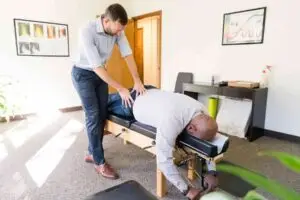
People are often surprised by how relaxed the process is. You lie down fully clothed on the decompression table, and a comfortable padded support holds you in place while the unit gently applies and releases traction.
There is no sudden pulling or discomfort. The cycles are slow and controlled, and many patients find the sessions genuinely calming. Some even doze off.
A typical course involves a series of sessions over several weeks, since disc recovery is gradual. We track your response along the way and adjust the plan based on how you are progressing.
What Back Surgery Involves
Back surgery is a broad category, but the common types for disc problems include discectomy, laminectomy, and spinal fusion. Each one physically changes the spine to relieve pressure on a nerve or stabilize a segment.
A discectomy removes part of a herniated disc. A laminectomy removes bone to create more space. A fusion permanently joins two or more vertebrae so they no longer move.
These procedures can be effective and, in the right cases, necessary. They also come with the realities of any operation: anesthesia, incisions, a recovery period, potential complications, and the fact that altering the spine’s structure cannot be reversed.
Spinal Decompression vs. Surgery: The Key Differences
Here is how the two approaches compare at a glance:
- Invasiveness: Decompression is non-invasive with no incisions. Surgery is invasive and alters the spine.
- Recovery: Decompression has no downtime. Surgery requires weeks to months of recovery.
- Risk: Decompression carries minimal risk. Surgery carries the risks that come with any operation.
- Reversibility: Decompression changes nothing permanently. A fusion permanently changes how your spine moves.
- Typical use: Decompression is a first-line conservative option. Surgery is generally a later step when other care has failed.
The takeaway is not that surgery is bad. It is that decompression lets you try a low-risk path before committing to a permanent one.
Who Spinal Decompression Tends to Help
Decompression is a strong option for people dealing with disc-related pain. That includes herniated and bulging discs, along with the nerve pain that shows up when a disc presses on the sciatic nerve.
It also helps with chronic spinal compression that has built up over time. If you have been living with sciatica or ongoing low back pain, this is often a sensible place to begin.
It tends to suit people who want to exhaust their non-surgical options before considering anything permanent. That describes a lot of the disc and sciatica patients we work with, and it is a reasonable instinct to follow. Trying the lower-risk path first costs you little and can spare you a much bigger decision later.
We go deeper into disc-specific care on our herniated and bulging disc page. The short version is that many disc problems respond well to treatment that relieves pressure without an operation.
What Results Can You Realistically Expect?
Honesty matters here, so we avoid promises. Spinal decompression is not a guaranteed fix, and results vary from person to person depending on the condition, its severity, and how long it has been present.
That said, many patients with disc-related pain and sciatica experience meaningful relief over a course of treatment. Some notice changes within the first few weeks, while others improve more gradually as the disc responds.
Because the process is measured and non-invasive, we can track how your body is responding and adjust the plan accordingly. If decompression is helping, we continue. If it is not the right fit, we say so and look at other options.
When Surgery Is the Right Call
Decompression is not for everyone, and we are honest about that. Some situations genuinely call for surgical evaluation.
Progressive nerve damage, significant muscle weakness, or loss of bladder or bowel control are red flags that need prompt medical attention. Severe cases that do not improve with any conservative care may also point toward surgery.
Part of good care is knowing where that line is. We work alongside other providers and will tell you plainly if we think your situation needs more than we offer.
Why We Start With the Least Invasive Option
Dr. Andrew Newell’s philosophy is to keep care as natural as possible, as much as possible. For disc and sciatica pain, that usually means starting with the option that carries the least risk and the fewest permanent consequences.
Surgery cannot be undone. Decompression can be tried, measured, and adjusted based on how your body responds. If it works, you have avoided an operation entirely. If it does not, you have lost very little and can still explore other options.
That order matters. Reaching for the most drastic solution first is rarely the wisest move when a gentler one is available.
How Decompression Fits With Chiropractic Care
Spinal decompression tends to work even better when it is paired with the right chiropractic care. Relieving pressure on a disc is one piece, but the surrounding spine also needs to move and function properly.
At our Austin practice, we combine spinal decompression with gentle adjustments that address alignment and reduce mechanical stress on the affected area. Together, they support the disc from more than one angle.
This combined approach is a big part of why so many patients are able to find relief without surgery. The two treatments reinforce each other.
Is Spinal Decompression Covered by Insurance?
Coverage depends on your plan, and we are glad to help you understand your options. Full Life Chiropractic accepts Blue Cross Blue Shield, and we also offer payment plans, wellness memberships, and CareCredit financing for treatment.
If your back or nerve pain is related to a car accident, your care may be covered while your claim is active. We can walk you through the specifics of your situation before you commit to anything.
The point is to keep a non-surgical option within reach, so cost is not the thing standing between you and relief.
If disc or sciatica pain has you weighing your options, reach out to Full Life Chiropractic in Austin or call 512-953-9612 to find out whether decompression is a fit for you.