
What Exactly Is Vertigo?
Vertigo isn’t just feeling dizzy or lightheaded. It’s the distinct sensation that either you or your surroundings are spinning or moving when they’re actually still. Unlike general dizziness, vertigo has a rotational quality that can be incredibly disorienting and frightening.
True vertigo often comes with additional symptoms like nausea, vomiting, sweating, headaches, and balance problems. Some people describe it as feeling like they’re on a boat in rough waters, even when they’re standing on solid ground.
In Austin’s fast-paced environment, vertigo can be particularly problematic. Imagine trying to navigate downtown traffic, attend important work meetings, or enjoy outdoor activities at Zilker Park when you never know if the world might suddenly start spinning.
The Inner Ear Assumption
Most people – and unfortunately, many healthcare providers – immediately assume vertigo is caused by inner ear problems. Conditions like BPPV (benign paroxysmal positional vertigo), Meniere’s disease, or vestibular neuritis are the usual suspects.
While inner ear issues certainly can cause vertigo, this assumption leads to a critical oversight. When treatments focused solely on the inner ear don’t work, patients are often left frustrated and without answers.
They may be told to “just live with it” or that their vertigo is caused by stress or anxiety.
What’s often missing from this equation is an evaluation of the upper cervical spine, even though the connection between neck problems and balance issues is well-established in research.
Your Upper Cervical Spine: The Balance Connection
Your upper cervical spine consists of the atlas (C1) and axis (C2) vertebrae, which sit right where your skull meets your neck. These bones have a crucial relationship with your balance system that most people don’t understand.
Here’s why this area is so important for balance: your upper cervical spine is packed with special sensors called mechanoreceptors. These sensors constantly send information to your brain about the position and movement of your head in space. Your brain uses this information, along with input from your inner ear and eyes, to maintain balance and spatial orientation.
When your upper cervical vertebrae are misaligned – even by just a few millimeters – these mechanoreceptors send faulty information to your brain. Imagine trying to balance yourself when your body’s position sensors are giving your brain incorrect data. The result? Vertigo, dizziness, and balance problems.
The Austin Connection: How Our Lifestyle Creates Upper Cervical Problems
Austin’s modern lifestyle creates perfect conditions for upper cervical misalignments that can lead to vertigo. Our tech-heavy economy means many people spend hours each day with their heads in forward positions, staring at computer screens. This “tech neck” posture puts enormous strain on the upper cervical spine.
Austin’s infamous traffic contributes too. Even minor fender-benders on I-35 or MoPac can create whiplash injuries that misalign the upper cervical spine. Many people don’t realize that whiplash can occur at speeds as low as 8 mph, and the symptoms – including vertigo – may not appear for weeks or months after the accident.
Our city’s active outdoor culture, while generally healthy, also creates opportunities for neck injuries. Cycling accidents, water sports mishaps at Lake Austin, rock climbing falls, or even aggressive volleyball games at Zilker can cause subtle upper cervical trauma that later manifests as vertigo.
How Upper Cervical Misalignment Creates Vertigo
The mechanism is actually quite straightforward once you understand the anatomy involved. When your atlas or axis vertebrae shift out of their proper position, several things happen that can trigger vertigo symptoms.
First, the faulty mechanoreceptor input we discussed creates sensory confusion. Your inner ear might be telling your brain you’re upright and still, but your neck sensors are sending conflicting information. This sensory mismatch is interpreted by your brain as movement, resulting in the spinning sensation of vertigo.
Second, upper cervical misalignments can affect blood flow to the brain. The vertebral arteries, which supply blood to the parts of your brain responsible for balance, pass through small openings in your upper cervical vertebrae. When these bones are misaligned, they can compress or irritate these crucial blood vessels, potentially affecting the balance centers in your brain.
Third, misalignments can create muscle tension patterns that affect the suboccipital muscles – small but important muscles at the base of your skull. These muscles are intimately connected to your balance system, and when they’re chronically tight or imbalanced, they can contribute to vertigo symptoms.
Why Traditional Vertigo Treatments Often Fail
When vertigo is actually coming from upper cervical problems, treatments focused on the inner ear are unlikely to provide lasting relief. Medications might temporarily suppress symptoms, but they won’t correct the underlying spinal misalignment causing the problem.
Inner ear procedures, balance retraining exercises, and dietary changes may provide some benefit, but patients often find that their vertigo returns or never fully resolves. This is incredibly frustrating for people who have been suffering for months or years, trying treatment after treatment without success.
The missing piece is often a proper evaluation and treatment of the upper cervical spine.
The Blair Upper Cervical Solution
At Full Life Chiropractic, we use Blair Upper Cervical technique specifically designed to identify and correct upper cervical misalignments that can cause vertigo. This approach is particularly effective because it’s precise, gentle, and addresses the root cause of many vertigo cases.
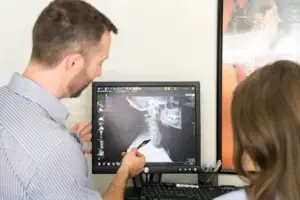
Blair technique uses detailed imaging to show us exactly how your upper cervical vertebrae have misaligned. We can see the specific direction and degree of misalignment, allowing us to make precise corrections tailored to your individual situation.
The adjustments themselves are gentle – nothing like the forceful manipulations many people associate with chiropractic care. We use light pressure applied in specific directions to encourage your vertebrae back into
their proper positions.
What to Expect from Upper Cervical Care for Vertigo
Many patients experience some improvement in their vertigo symptoms within the first few treatments, though everyone responds differently. Some notice immediate changes in their balance and orientation, while others see gradual improvement over several weeks.
The key is that we’re addressing a root cause rather than just managing symptoms. As your upper cervical spine stabilizes in proper alignment, the mechanoreceptors begin sending accurate information to your brain, blood flow normalizes, and muscle tension patterns resolve.
Most patients find that not only does their vertigo improve, but they often experience better sleep, fewer
headaches, and improved overall well-being. This makes sense when you consider how important proper upper cervical function is for overall health.
Austin Success Stories
We’ve helped many Austin residents overcome vertigo that had been plaguing them for years. A software engineer who couldn’t look up at monitors without triggering spinning sensations. A teacher who had to hold onto desks to walk around her classroom. A weekend warrior who gave up cycling because balance problems made it dangerous.
The common thread in these success stories is that traditional inner ear treatments had failed, but once we identified and corrected their upper cervical misalignments, their vertigo resolved.
Take Action on Your Vertigo
If you’re dealing with recurring vertigo that hasn’t responded well to traditional treatments, it’s time to consider the upper cervical connection. Many people suffer unnecessarily because no one has evaluated their neck as a potential source of their balance problems.
Vertigo can be incredibly disruptive to your life, affecting your ability to work, drive, exercise, and enjoy daily activities. But when it’s coming from upper cervical dysfunction, it’s often very treatable with the right approach.
Ready to explore whether your vertigo might be coming from your neck? Book your consultation today by clicking the “Book Appointment” button above or you can find more information here and discover how Blair Upper Cervical care might finally resolve your balance issues.
Don’t let another day of spinning sensations and balance problems keep you from living your life. See what other Austin residents are saying about finding relief from chronic vertigo on our Google reviews – your steady, balanced life is waiting!