
Painkillers and structural correction take opposite approaches to chronic pain. Painkillers block or dull the pain signal, which brings relief but leaves the underlying cause untouched. Structural correction works to address the physical problem creating the pain in the first place. One manages how you feel, and the other aims to change why you hurt.
What Painkillers Actually Do
Painkillers, whether over-the-counter or prescription, work by interrupting pain. Some reduce inflammation, while others block the pain signals traveling to your brain or change how your brain interprets them.
The result is real relief, and that relief has value. When you are hurting, turning down the volume on pain can help you sleep, move, and get through the day.
The limitation is what they do not do. A painkiller does not repair a misaligned joint, a compressed nerve, or a structural problem in your spine. When the medication wears off, the cause is still there, which is why the pain tends to return.
In other words, a painkiller changes your experience of the problem without changing the problem itself. That is a useful thing in the short term and a poor strategy for the long term.
What Structural Correction Means
Structural correction takes aim at the physical source of the pain rather than the sensation. In the case of the spine, that often means addressing a misalignment that is irritating a nerve or throwing off how your body carries load.
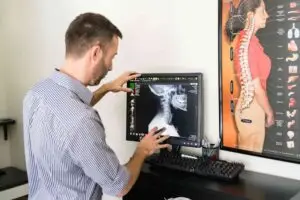
At Full Life Chiropractic, that work centers on the Blair upper cervical technique. We use precise imaging to identify exactly how your top vertebrae have shifted, then make a gentle correction based on your individual anatomy.
The idea is simple. If a structural problem is causing your pain, fixing that problem gives your body the chance to stop generating the pain on its own. You are not masking the signal, you are removing the reason it is firing.
Painkillers vs. Structural Correction: The Core Difference
Here is the contrast at a glance:
- Target: Painkillers act on the pain signal. Structural correction acts on the physical cause.
- Duration: Painkiller relief fades when the dose wears off. Structural correction aims for lasting change.
- Direction: Painkillers manage symptoms over time. Structural correction works toward resolving the problem.
- Dependency: Painkillers may need to be repeated indefinitely. Structural correction aims to reduce your need for ongoing care.
These are not always an either-or choice, but they point in very different directions over the long run.
The Problem With Managing Pain Indefinitely
Relying on painkillers as a long-term answer carries some real drawbacks. The relief is temporary by design, so the cycle repeats every time the medication fades.
There are also the downsides of long-term use to consider, from side effects to tolerance to the simple fact that the root problem keeps progressing while it goes unaddressed. A misalignment that is never corrected does not tend to improve on its own.
Masking pain for years can even let a fixable problem quietly worsen. The absence of pain is not the same as the absence of the underlying issue.
There is nothing wrong with wanting relief. The concern is only what happens when relief becomes the entire strategy and the cause is left to progress in the background, year after year, while it could have been addressed.
Why the Same Pain Keeps Coming Back
One of the clearest signs that something structural is at work is pain that keeps returning. You take something, feel better, and then the same ache is back a few hours or days later.
That cycle is the tell. If the pain came from a passing strain, it would resolve and stay gone. When it keeps circling back to the same spot, it usually means the underlying cause is still there, generating the signal again and again.
No amount of blocking that signal changes the source. The pain returns because the reason for it was never addressed.
Where Painkillers Still Have a Place
None of this means painkillers are the enemy. They have a genuine role, and we are not here to dismiss medical care.
Short-term relief during a flare-up, or while you work toward correcting the underlying cause, can be entirely reasonable. The trouble is not using a painkiller. The trouble is relying on it as the whole plan when something structural is driving the pain.
The two approaches can even coexist. Medication can keep you more comfortable in the short term while structural correction addresses the cause underneath.
What Chronic Pain Is Actually Telling You
It helps to think of pain as information rather than only an inconvenience. Pain is your body flagging that something is wrong and asking for attention.
When you only silence that signal, you lose the message along with the discomfort. The problem it was pointing to keeps going, sometimes progressing quietly while you feel fine.
Structural correction takes the message seriously. Instead of muting the alarm, it looks for what set the alarm off and works to resolve it, so the signal is no longer needed.
How Structural Correction Works at Full Life Chiropractic
Our approach in Austin is built around finding and fixing the structural cause, then getting out of your way. It starts with a detailed exam and imaging to identify what is actually happening in your spine.
From there, corrections are gentle and specific to you, with no cracking or twisting. We also track whether each correction is holding, and we only adjust when the measurements show it is needed. That is a core part of our Blair upper cervical chiropractic care, and it is why so many patients with ongoing neck pain find a different kind of result.
The goal is not to see you forever. It is to correct the problem and let you get back to your life.
How This Applies to Neck and Back Pain
Chronic neck and back pain are areas where this difference shows up clearly. Much of it traces to structural issues, from misaligned vertebrae to uneven load on the spine.
A painkiller can quiet that pain, but it does nothing about the misalignment creating it. The physical problem stays exactly where it was, which is why the relief never lasts.
Correcting the structure targets the reason the pain exists. When a misalignment is the driver, addressing it gives the pain a genuine chance to resolve rather than simply pausing. That is the outcome most people were hoping for when they first reached for the medicine cabinet.
Choosing an Approach That Has an Endpoint
This comes down to what you want your care to accomplish. If your goal is to feel better for a few hours at a time, a painkiller does that.
If your goal is to stop hurting because the cause is gone, structural correction is aimed at that outcome. It asks more of the process up front, but it points toward an endpoint rather than an endless routine.
For a lot of people in Austin who are tired of managing the same pain year after year, that shift in thinking is what finally changes things.
If you are ready to address the cause of your pain instead of masking it, schedule a visit with Full Life Chiropractic in Austin or call 512-953-9612.