Occipital neuralgia – the sharp, shooting pain that starts at the base of the skull and radiates up over the back of the head – is frequently misdiagnosed as migraine or tension headache, which means many patients are being treated for the wrong condition for years. The occipital nerves emerge directly from the upper cervical spine at C1, C2, and C3, which makes structural misalignment at those levels a primary driver of occipital nerve pain. Blair upper cervical chiropractic addresses that structural cause precisely – and it’s one of the most direct conservative approaches available for this condition in Austin.
What Occipital Neuralgia Actually Is – and Why It’s Frequently Missed
The greater and lesser occipital nerves travel from the upper cervical spine up through the suboccipital muscles to supply sensation to the back and top of the head. When these nerves are compressed or irritated – by muscle tension, joint restriction, or structural misalignment at C1 and C2 – the result is the characteristic occipital neuralgia pain pattern: sharp, stabbing, or electric-shock pain at the base of the skull that travels upward and sometimes reaches behind the eye.
The reason occipital neuralgia gets misdiagnosed so often is that the pain it produces can look similar to migraine on the surface. Both can cause unilateral head pain. Both can be severe. The key differences – pain that’s sharply localized to the back of the skull, tenderness on pressure at the nerve exit points, pain that radiates in a specific pathway up the scalp – require an examiner who’s looking for them.
Patients who’ve been managed for years with migraine medications without meaningful relief, or who’ve had multiple specialist visits without a clear answer, should consider whether occipital neuralgia – and specifically its cervical structural component – has been properly evaluated.
The Structural Mechanism: Why C1 and C2 Matter So Much
The atlas (C1) and axis (C2) are the top two vertebrae in the spine. The occipital nerves pass directly through the suboccipital muscles that attach to and control C1 and C2 movement. This means that when the atlas or axis shift out of their normal position, two things happen simultaneously: the joint restriction and postural change cause the suboccipital muscles to tighten adaptively, and the displaced vertebrae create mechanical irritation directly adjacent to the nerve exit points.
This is a mechanical problem. The nerve itself isn’t permanently damaged in most cases. The structural environment around the nerve has become unfavorable – tight muscles compressing the nerve, restricted joints creating localized inflammation, displaced vertebrae altering the anatomy through which the nerves pass. Addressing the structure addresses the nerve.
That’s the logic behind Blair upper cervical chiropractic for occipital neuralgia. Not symptom suppression. Structural correction at the source.
Why Nerve Blocks Provide Temporary Relief but Don’t Last
Occipital nerve blocks are a common treatment for this condition – an injection of anesthetic and corticosteroid directly at the nerve exit point at the base of the skull. They work. The relief can be significant. The problem is that it’s temporary.
When the block wears off, the symptoms return because the mechanical cause – the C1/C2 misalignment and the suboccipital muscle tension it’s driving – hasn’t changed. Nerve blocks manage the nerve’s response to an irritating structural environment. They don’t change the structural environment itself.
For patients who’ve had repeat nerve blocks with diminishing duration of relief, the question worth asking is whether the structural cause has been evaluated and addressed. A precise Blair correction that restores normal C1 and C2 alignment changes the mechanical environment around the occipital nerves – which is something a nerve block cannot do.
What Makes Blair the Right Tool for This Condition
The precision of Blair upper cervical analysis is particularly important for occipital neuralgia because the structural changes involved are subtle. We’re not talking about the gross pathology that shows up on a standard MRI. We’re talking about the precise three-dimensional position of C1 relative to the skull and C2, and how that position affects the suboccipital muscle tone and the mechanical environment around the occipital nerve exit points.
Standard chiropractic cervical adjustments address the neck in a general way. They may temporarily reduce muscle tension and improve mobility. But without the precise X-ray analysis that identifies exactly how C1 and C2 are displaced and exactly what correction angle is needed, the adjustment is approximate rather than specific. For a condition as location-sensitive as occipital neuralgia, approximate isn’t enough.
Blair analysis maps the misalignment in three dimensions. The correction is then delivered at the precise angle required by that individual patient’s anatomy – no cracking, no twisting, low force. The goal is a correction that holds, so the structural environment around the occipital nerves has a chance to normalize.
What to Expect at Your First Evaluation at Full Life Chiropractic
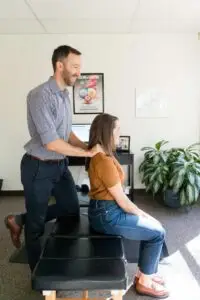
Dr. Newell’s evaluation for occipital neuralgia patients starts with a thorough history: where the pain is, how it started, whether there was a prior injury, what makes it better or worse, and what treatments have been tried. A hands-on assessment of the suboccipital muscles and upper cervical joints follows – the tenderness pattern on palpation is often diagnostically useful for identifying occipital nerve involvement.
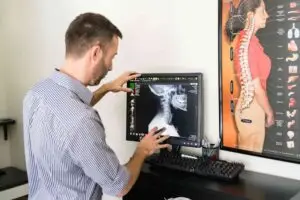
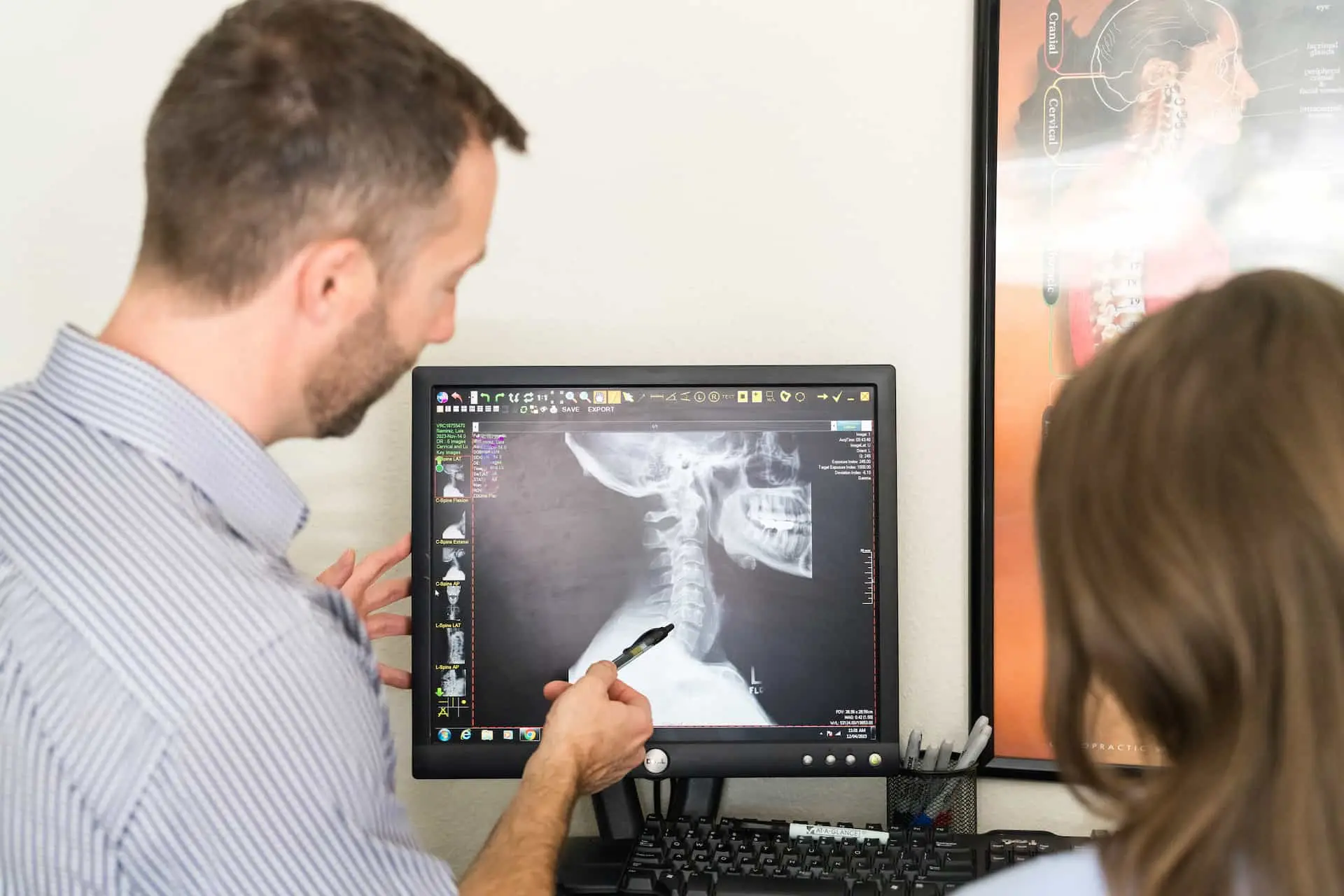
If the examination suggests a significant upper cervical structural component, Blair X-rays are taken to map the precise misalignment. This is the point at which the structural cause becomes visible and specific rather than inferred. The analysis guides the correction, and subsequent visits use objective measurements to track whether the correction is holding.
One thing worth noting: if you have prior MRI or CT imaging of the cervical spine, bring it to your first appointment. Normal imaging doesn’t rule out a Blair-relevant misalignment, but it provides useful clinical context about disc health, stenosis, or other factors that affect how care is approached.
Conditions That Commonly Overlap with Occipital Neuralgia
Upper cervical subluxation tends to produce clusters of symptoms, not isolated ones. Patients presenting with occipital neuralgia at Full Life Chiropractic frequently also report chronic headaches, upper neck pain and stiffness, facial pain, or dizziness and vestibular symptoms. This is expected given the anatomy – multiple nerve structures share proximity to C1 and C2, and a structural displacement affecting one tends to affect others.
Correcting the underlying upper cervical misalignment often produces improvement across several of these symptoms simultaneously. The structural correction is the common factor.
Post-Injury Occipital Neuralgia
One of the most consistent patterns in occipital neuralgia patients is a history of head or neck trauma. Whiplash from a car accident, a fall, a sports impact, or any force that displaced C1 or C2 and was never fully corrected can produce chronic occipital nerve irritation that develops over months or years after the original injury.
Standard post-accident evaluation – even good emergency care – doesn’t look for the precise upper cervical displacement that Blair analysis identifies. The ER clears the fracture risk. The structural misalignment that causes long-term consequences often goes undetected. If your occipital neuralgia started after an injury of any kind, that history matters and should be evaluated specifically.
Ready to Address the Structural Cause of Your Occipital Neuralgia?
If you’re in Austin and you’ve been living with occipital nerve pain that medications, nerve blocks, or previous chiropractic care haven’t resolved, a Blair upper cervical evaluation at Full Life Chiropractic is the right next step. The evaluation will tell you honestly whether a cervical structural component is present and what correcting it would involve.
Schedule your consultation online or call us at 512-953-9612. Full Life Chiropractic is located at 3355 Bee Caves Rd #603, Austin, TX 78746.